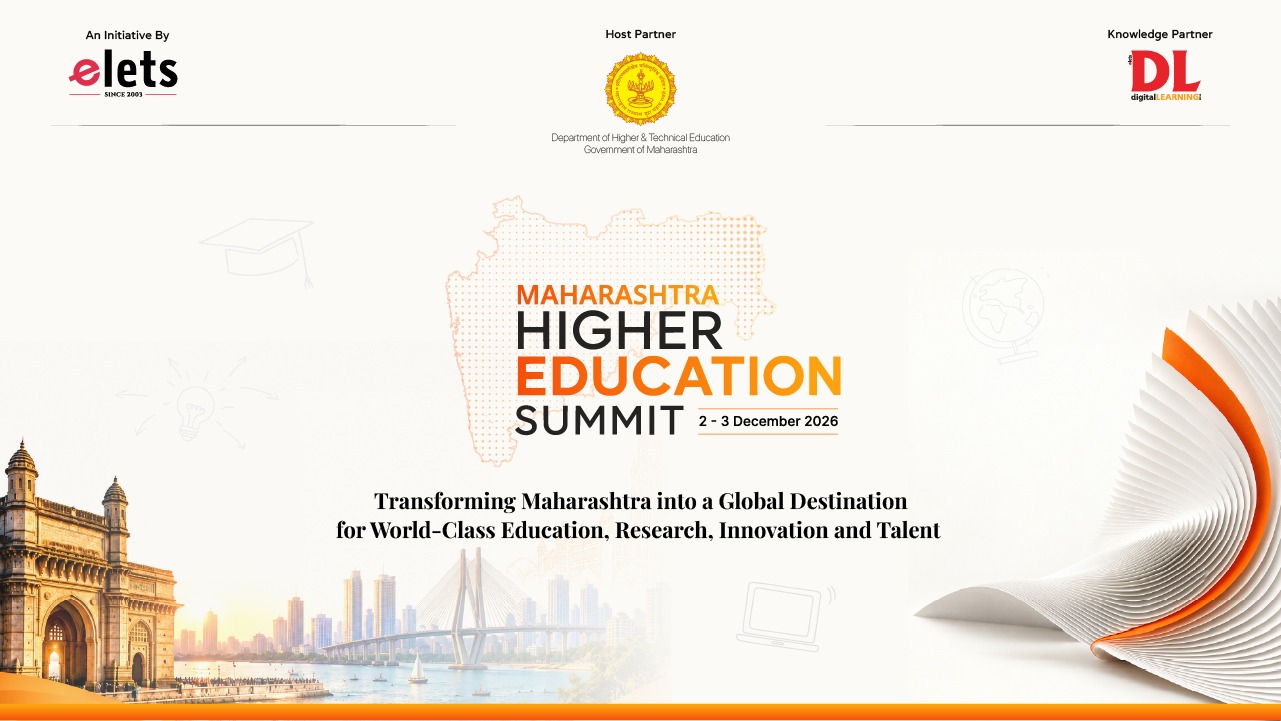
Maharashtra’s Higher Education Vision 2047: Building World-Class Universities and Global Academic Partnerships
India’s ambition to become a developed nation by 2047 rests on one foundation: the quality of its human capital. Among Indian states, Maharashtra is positioned to lead this transformation. With a dense network of universities, a thriving industrial base, and a young, aspiring population, the state has the ingredients to build a higher education ecosystem that competes globally. The Maharashtra education summit and similar platforms are now central to turning this ambition into an actionable roadmap.
Why Maharashtra is the right place to lead
Maharashtra is home to one of the largest higher education systems in the country, spanning public universities, deemed institutions, autonomous colleges, and premier technical and management schools. Cities like Mumbai, Pune, Nagpur, and Nashik are established education hubs, drawing students from across India and, increasingly, from abroad.
The state also anchors India’s financial capital, a growing technology corridor, and a robust manufacturing sector. This proximity between academia and industry is a rare advantage. When universities sit close to employers, research labs, and startups, graduates are better prepared and innovation moves faster from classroom to market.
What Vision 2047 means for higher education
Vision 2047 education planning is about more than adding seats or building campuses. It asks a deeper question: what kind of graduates, research, and institutions will a developed India need in 2047?
Several priorities stand out:
- Quality over quantity: Moving from expansion-led growth to outcome-led excellence, with stronger accreditation, faculty development, and learning outcomes.
- Research and innovation: Increasing funding for interdisciplinary research, patents, and industry-linked labs.
- Skills and employability: Embedding practical, future-ready skills such as AI, data science, sustainability, and entrepreneurship into curricula.
- Inclusion and access: Ensuring students from rural, tribal, and economically weaker backgrounds can access quality education.
- Alignment with NEP 2020: Implementing multidisciplinary learning, flexible credit systems, and the Academic Bank of Credits at scale.
A higher education summit Maharashtra brings policymakers, vice-chancellors, industry leaders, and global academics into one room to align these priorities and set measurable targets.
The road to world-class universities in India
The phrase ‘world-class universities in India’ is often discussed, but what does it actually require? Global rankings point to a consistent set of factors: strong research output, international faculty and student mix, industry partnerships, financial autonomy, and a culture of academic freedom.
For Maharashtra’s institutions, this means:
- Investing in research infrastructure: Modern laboratories, innovation centres, and incubators that attract top talent.
- Attracting and retaining faculty: Competitive compensation, research grants, and professional growth pathways.
- Strengthening governance: Greater institutional autonomy balanced with transparency and accountability.
- Building brand and visibility: Showcasing research achievements and alumni success on global platforms.
Several Maharashtra institutions already perform strongly in national rankings. The next step is to translate that strength into international recognition, which requires sustained, strategic effort rather than isolated initiatives.
The power of global university partnerships
No university becomes world-class in isolation. Global university partnerships are among the fastest ways to raise quality, expand opportunity, and build credibility.
Meaningful partnerships can take several forms:
- Dual and joint degree programmes that let students earn credentials from both Indian and foreign institutions.
- Faculty and student exchange that exposes learners to diverse teaching methods and research cultures.
- Joint research projects tackling shared challenges in health, climate, technology, and agriculture.
- Twinning and credit-transfer arrangements that give students flexibility to study across borders.
- Collaborative centres of excellence that combine Indian talent with global expertise.
India’s regulatory landscape is also evolving, with provisions that allow foreign universities to set up campuses and collaborate with Indian institutions. For Maharashtra, with its infrastructure, talent pool, and cosmopolitan outlook, this opens significant opportunities to host international campuses and co-developed programmes.
Strengthening international higher education ties
International higher education is a two-way street. While Indian students have long travelled abroad for study, the goal now is to make India itself a destination for global learners. Maharashtra can lead this shift by:
- Creating welcoming ecosystems for international students, including housing, visa facilitation, and support services.
- Offering globally benchmarked programmes in emerging fields.
- Promoting “Study in Maharashtra” as a brand backed by quality assurance.
- Building alumni networks that connect graduates to opportunities worldwide.
Retaining talent at home while drawing in global students creates a virtuous cycle: stronger institutions, richer classrooms, and a more connected economy.
Why summits matter
Policy documents set direction, but conversations drive action. A well-structured Maharashtra education summit serves several purposes:
- Convergence: Government, academia, and industry align on shared goals.
- Exchange of best practices: Institutions learn from global models and from one another.
- Partnership building: Universities meet potential international collaborators face-to-face.
- Accountability: Public commitments and roadmaps create momentum and measurable follow-through.
When summits are designed around concrete outcomes, such as signed MoUs, pilot programmes, and funding commitments, they become launchpads rather than talking shops.
Challenges to address
The path to 2047 is not without obstacles. Funding constraints, faculty vacancies, uneven quality across institutions, and the gap between curriculum and industry needs remain real concerns. Regulatory processes can also slow innovation. Addressing these requires coordinated policy action, sustained investment, and a willingness to experiment with new models.
Equally important is ensuring that the pursuit of global excellence does not leave behind students in smaller towns and underserved regions. Digital learning, regional campuses, and scholarships can help extend quality education to every corner of the state.
Looking ahead
Maharashtra’s higher education vision for 2047 is bold, but it is achievable. With strategic investment, strong industry linkages, and deep international engagement, the state can build institutions that rank among the best in the world and prepare graduates who lead in the global economy.
The journey begins with conversation, collaboration, and commitment. Platforms like the higher education summit Maharashtra give stakeholders the space to turn vision into practice, one partnership, one programme, and one institution at a time.
The question is no longer whether Maharashtra can build world-class universities, but how quickly it can bring together the people and partnerships to make it happen.