
A greener economy needs more than ambition. It needs capital. From renewable energy and climate-resilient infrastructure to sustainable agriculture, electric mobility and nature-based solutions, the transition towards greener growth depends on directing finance towards projects that deliver both economic and environmental value. This is where green finance comes in.
There is no internationally agreed definition of green finance. Broadly, it refers to funding for environment-oriented technologies, projects, industries and businesses. In a narrower sense, it includes financial products and services such as loans, credit cards, insurance and bonds. As discussions around sustainable development gain importance, these financing mechanisms are also becoming relevant to the conversations shaping Public Finance Conference India 2026.
Green investing recognises the value of the environment and natural capital. It seeks to improve human well-being and social equity while reducing environmental risks and strengthening ecological integrity. Other terms used for green finance include environmentally responsible investment and climate change investment.
Why Does Green Finance Matter?
-
Bridging the Funding Gap
Connecting green ideas with implementation by providing the financial support needed to turn plans into projects.
-
Supporting Emerging Technologies
Funding green industries and technologies at different stages of maturity, particularly those without a proven commercial track record.
-
Addressing Financing Challenges
Helping unconventional or untested green projects access finance when traditional funding may be difficult or commercially unattractive.
-
Driving Low-Carbon Growth
Directing capital towards environmental improvement and sustainable economic activities to support the transition to a greener economy.
-
Turning Ideas into Action
Enabling promising green solutions to move beyond the planning stage and reach implementation.
How Does Green Finance Work?
Green finance generally comes from three sources: domestic public finance, international public finance, and private sector finance. Each plays a different role in supporting the transition, depending on the scale, funding requirements, and nature of a project.
Domestic public finance refers to direct government funding, while international public finance includes funding from international organisations and multilateral development banks. Private sector finance, meanwhile, includes both domestic and international sources that can support green businesses, technologies and infrastructure.
These different sources can be brought together through various investment structures, depending on the nature and maturity of green industries and technologies. This makes green finance a broad financial framework rather than a single instrument, allowing different forms of capital to support projects at different stages of development.
Green Finance as the Backbone of Resilient Economies
Green finance is increasingly being viewed as a central part of competitive and resilient economies. Union Minister for Environment, Forest and Climate Change Shri Bhupender Yadav has described it as the “backbone of resilient and competitive economies.”
The objective is to restructure capital flows so that investments in infrastructure, agriculture, transport and industry generate economic returns while also strengthening sustainability. Rather than treating environmental considerations as separate from economic planning, this approach brings them into decisions about where capital is directed and how development is pursued.
The Minister stressed that the pathway to building economies of the future lies in aligning progress and profits with sustainability, with people and ecosystems placed at the centre of growth. This connects economic development with climate action, biodiversity protection and ecological well-being, making sustainability an integral part of long-term economic planning.
From Climate Finance to Development Finance
One of the principles highlighted by Shri Yadav is that climate finance is indistinguishable from development finance. This perspective recognises that investments in cleaner energy, better infrastructure and climate-resilient systems can contribute to both environmental protection and wider economic development.
Clean power, efficient cities, climate-smart agriculture and resilient infrastructure are not simply environmental additions. They are also linked to national security and industrial competitiveness, as countries increasingly look towards sustainable technologies and infrastructure to support their future growth.
Countries that mobilise green investments today, he noted, can position themselves to dominate future value chains of industry and trade. At the same time, developed countries have a responsibility to support the Global South. The UNFCCC process target of USD 300 billion by 2035 has been described as inadequate compared with the scale of the challenge.
India’s Green Finance Push
India is taking steps to build confidence in green investments and strengthen the financial systems needed to support its sustainability ambitions. The issuance of sovereign green bonds has attracted strong international interest and has been highlighted as evidence of confidence in India’s green growth potential.
The Reserve Bank of India and the Securities and Exchange Board of India are also strengthening responsible disclosure, accountability and transparency in green instruments. These efforts are important for building trust among investors and supporting stability in a sector where the credibility of environmental claims matters as much as the availability of capital.
India is also fostering blended finance mechanisms that use public money to de-risk and accelerate private investment in renewable energy, energy efficiency, electric mobility, waste-to-wealth and nature-based solutions. By using public funding to make certain investments more attractive, these mechanisms can help bring additional private capital into projects that might otherwise struggle to secure financing.
The scale of financing required is significant. India will require more than USD 10 trillion by 2070 to achieve its net zero ambitions, making innovative financing mechanisms vital to mobilising the resources needed for the transition.
The Role of Carbon Finance
Carbon finance is another important part of the green finance landscape. The operationalisation of Article 6 of the Paris Agreement can help unlock climate finance through high-integrity carbon markets built on transparency and accountability.
Article 6 mechanisms allow countries to trade climate outcomes through bilateral and multilateral arrangements. These mechanisms can help buyer countries advance emission reductions while enabling seller countries to access finance and capacity development, creating opportunities for cooperation across national boundaries.
Hon’ble Minister highlighted the importance of such mechanisms in creating financial incentives and supporting access to new technologies. Quoting UNEP Executive Director Inger Andersen, he said, “Finance is the make-or-break issue for climate action.”
Green Credits and Private Participation
India’s Green Credit Programme, launched in October 2023, is another instrument aimed at encouraging positive environmental action, including eco-restoration. It seeks to create a framework through which environmental activities can attract participation and financial support.
On 29 August 2025, the Ministry of Environment, Forest and Climate Change notified a revised methodology for the programme. It introduced direct participation by private entities, mandatory minimum restoration commitments and greater scope for the utilisation of credits.
These measures aim to mobilise private capital while ensuring transparency and measurable environmental outcomes. They also highlight how financial incentives can encourage businesses and other private participants to contribute to environmental restoration.
Where Green Finance Can Create Opportunities
-
Investment Across Emerging Sectors
Unlocking investment in solar and wind power, green hydrogen, sustainable agriculture, the circular economy, and climate-resilient infrastructure.
-
Economic Growth and Employment
Developing new industries, generating employment, strengthening competitiveness and supporting India’s energy future.
-
Inclusive Green Financing
Designing financing mechanisms that benefit MSMEs, farmers and vulnerable communities alongside large projects and institutions.
-
Technology-Enabled Financing
Leveraging financial technology, digital platforms and AI-led solutions to improve project assessment, investment monitoring, transparency and tracking of environmental outcomes.
-
Expanding Green Financial Instruments
Mainstreaming green bonds, sustainability-linked loans, carbon markets and impact investment funds to connect investors with sustainable projects and diversify financing options for businesses and institutions.
Financing a Sustainable Future
Green finance represents a shift in how economic growth and investment are understood. It recognises that environmental progress requires financial support, while financial decisions themselves can influence environmental outcomes. This makes the way capital is raised, allocated and monitored an important part of building a sustainable economy.
Governments, financial institutions, investors, industry, regulators and citizens all have a role in building this new economic framework. For Shri Bhupender Yadav, financing the green transition is also an ethical responsibility towards future generations.
Failing to finance the green transition is a moral failure towards future generations.
Shri Bhupender Yadav, Union Minister for Environment, Forest and Climate Change
The Road Ahead for Public Finance
The challenge is therefore not simply to understand the need for a green transition, but to finance it at the scale required. Green finance brings economic ambition and environmental responsibility into the same conversation, providing the financial link between knowing what needs to change and doing what is needed to build a more sustainable future.
These questions around sustainable investment, innovative funding models and long-term fiscal planning are also becoming central to the future of public finance in India.
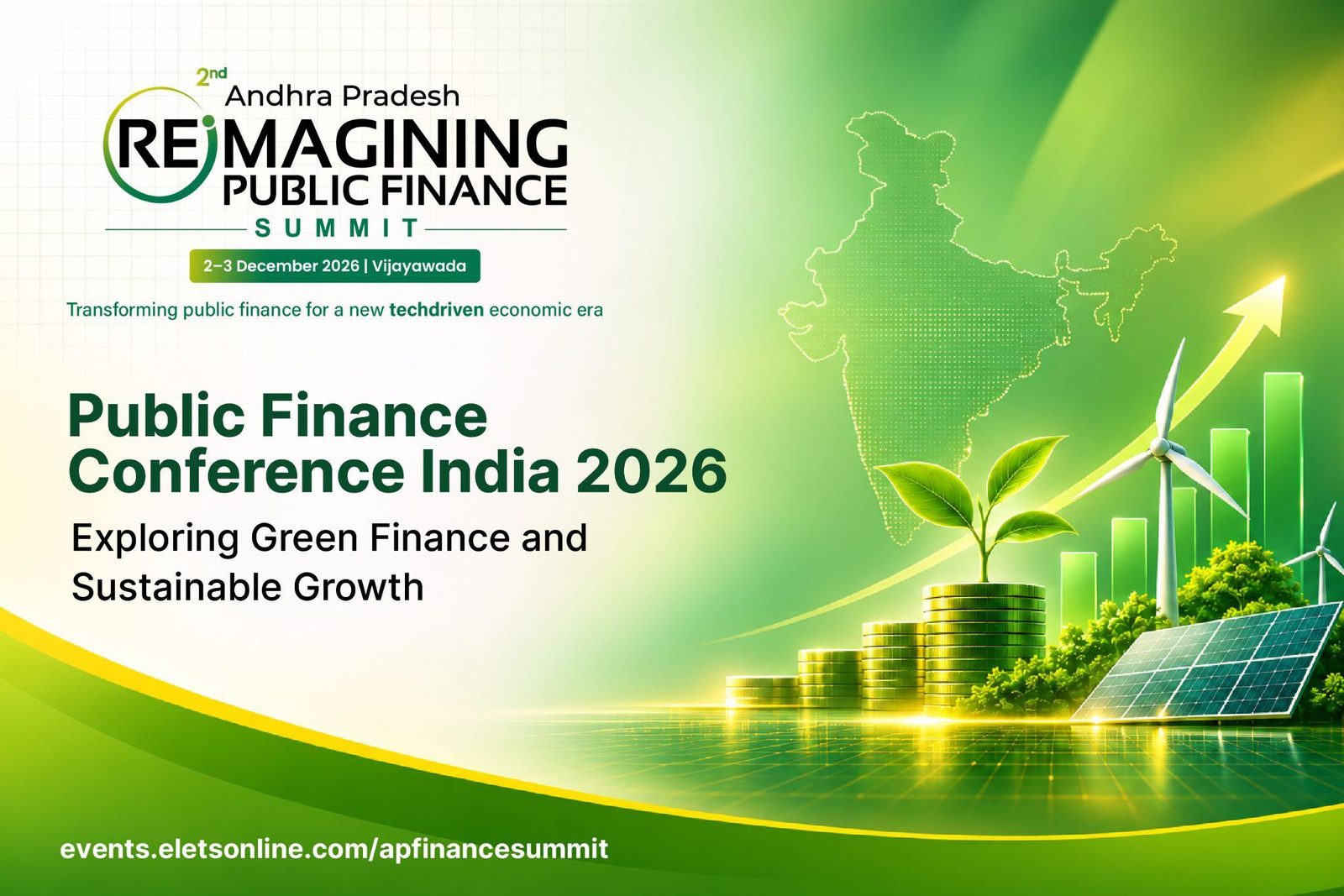
These questions will remain a central part of the conversations at the 2nd Andhra Pradesh Reimagining Public Finance Summit, scheduled for 2–3 December 2026 in Vijayawada. Organised by the Finance Department, Government of Andhra Pradesh, in association with Elets Technomedia, the summit will bring policymakers, financial institutions, industry leaders and experts together under the theme “Transforming Public Finance for a New Economic Era”. As part of the broader discussions shaping Public Finance Conference India 2026, the summit will explore how public finance can support economic growth, infrastructure development and sustainable investment.