
As government schemes reach millions of beneficiaries, ensuring that public money reaches the right people has become an important challenge. Artificial Intelligence is helping India’s public auditors examine financial records, identify suspicious patterns, and detect possible irregularities that may otherwise go unnoticed.
Every year, governments allocate significant funds to welfare programmes, infrastructure projects, and public services. But how can authorities ensure that this money is being used for its intended purpose? Are all beneficiaries eligible? Are payments reaching the right accounts? Are government contracts being awarded fairly? These questions make CAG fraud detection increasingly important, as identifying financial irregularities requires examining large volumes of financial records, transactions, and beneficiary information.
This is where AI in public finance is opening new possibilities. The Comptroller and Auditor General of India (CAG) is increasingly exploring Artificial Intelligence (AI) and Machine Learning (ML) to improve public auditing. These technologies can help auditors examine large datasets, identify unusual patterns, and highlight transactions that need closer investigation. In September 2025, CAG K. Sanjay Murthy highlighted that AI and ML had helped uncover numerous fraudulent cases in beneficiary schemes across several states, bringing greater attention to the role of technology in detecting financial irregularities.
From Traditional Auditing to AI-Powered Financial Monitoring
Traditional auditing involves examining financial documents, verifying transactions, and checking whether government funds have been spent according to approved rules. However, when departments manage thousands of transactions and maintain records across multiple digital platforms, manual verification can become time-consuming. It may also be difficult to identify connections between different transactions or spot irregularities spread across large datasets.
To address these challenges, CAG released its Artificial Intelligence Strategy Framework in April 2025. The framework outlines how AI can support different stages of the audit process through smarter data analysis, anomaly detection, risk assessment, and predictive insights. It aims to strengthen existing auditing methods rather than replace them.
Some of the important applications of AI in public auditing and CAG fraud detection include:
-
Anomaly detection
Identifying transactions that differ from normal financial patterns.
-
Data matching
Comparing records to identify duplicate entries and inconsistencies.
-
Clustering
Grouping similar transactions and entities to identify unusual relationships.
-
Risk assessment
Identifying areas that may require greater audit attention.
-
Network analysis
Examining connections between vendors, transactions, and other entities.
Together, these techniques can help auditors examine larger volumes of information and focus their attention on transactions that require further verification.
How CAG Identifies Fraud in State Welfare Schemes
One of the most important applications of data-driven auditing is beneficiary verification. Government welfare schemes are designed to support eligible individuals and families, but inaccurate records, duplicate entries, and outdated beneficiary information can affect the delivery of benefits.
AI-based data analysis can help identify inconsistencies across beneficiary databases, compare available records, and flag payments that may require additional checks. This is particularly important for schemes involving pensions, financial assistance and other direct welfare benefits.
A CAG audit of the National Social Assistance Programme (NSAP) in Gujarat provides an example of the challenges involved. The audit found that 1,072 beneficiaries who had been discontinued due to reasons such as death or moving above the poverty line continued receiving pensions. This resulted in ₹32.6 lakh being disbursed between 2017 and 2021.
The audit also identified 774 eligible beneficiaries in Bharuch and Dang districts who were excluded from the National Family Benefit Scheme, resulting in ₹1.55 crore in lost benefits between 2017 and 2020.
These findings highlight how gaps in beneficiary records can affect both the delivery and monitoring of government schemes. By analysing large datasets and identifying inconsistencies, technology-enabled auditing can help auditors locate such cases and examine whether public funds have reached the intended beneficiaries.
Beyond Beneficiaries: Where Else Can AI Detect Irregularities?
The use of AI in public auditing is not limited to welfare payments. Government expenditure also involves procurement, infrastructure projects, vendor payments, and digital records. Examining these areas together can help auditors identify risks that may not be visible through individual transaction checks.
-
Identifying unusual payment patterns
AI and ML can examine multiple transactions to identify repeated entries, unexpected variations, and unusual payment activity. These patterns can help auditors identify possible irregularities and decide which transactions need closer examination.
-
Monitoring government procurement
Public procurement involves several vendors, tenders, bids and contracts. CAG highlighted in May 2026 that AI, ML and network analysis could help identify procurement-related risks, including repeated bid rotations, suspicious clustering of vendors, abnormal pricing similarities, concentration of contract awards and limited competition across tenders. This approach can help auditors identify larger patterns instead of examining irregularities as isolated cases.
-
Detecting manipulation in digital records
As government departments increasingly use digital platforms, checking the accuracy of electronic records has become equally important. CAG has highlighted electronic document tampering as an area for remote audits. AI and ML-based forensic auditing can help identify suspicious changes and inconsistencies that require further investigation.
-
Expanding remote auditing
CAG has undertaken remote audits of GST, Stamp and Registration, e-Procurement, Works Audit and Direct Benefit Transfer schemes in some states. Greater use of digital records and analytical tools can support wider audit coverage and help officials examine government activities across different departments.
DBT Shows the Importance of Digital Verification
India’s Direct Benefit Transfer (DBT) framework offers another example of how digital systems can improve the monitoring and delivery of government benefits. By using digital records and verification processes, DBT and other governance reforms have helped identify duplicate and fake beneficiaries and reduce leakages in welfare delivery.
According to the DBT Bharat portal, the estimated cumulative savings and benefits from selected schemes up to March 2025 were:
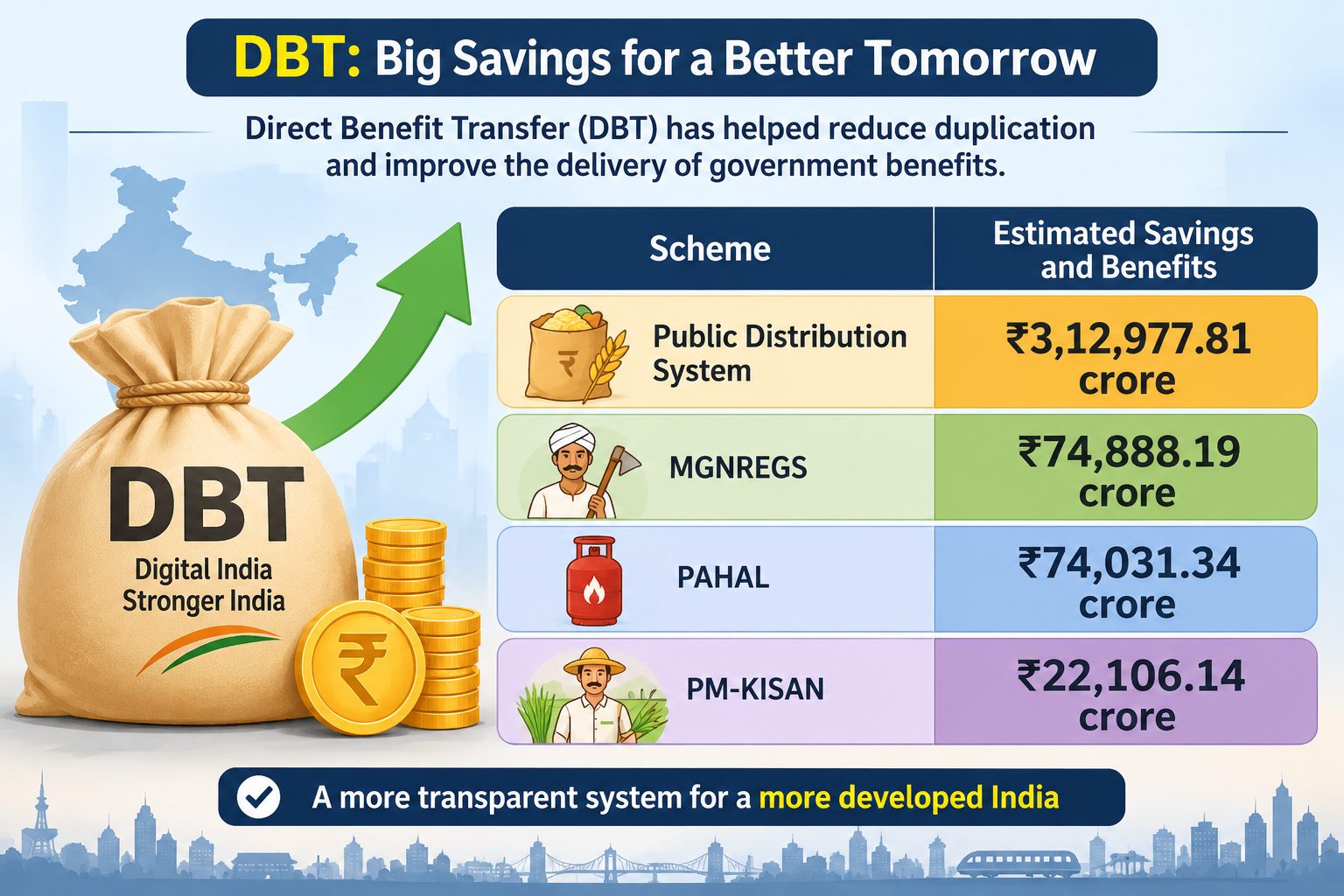
These figures were accompanied by the deletion of 6.36 crore duplicate and fake ration cards under PDS, 1.32 crore fake and duplicate job cards under MGNREGS, 4.09 crore duplicate and inactive LPG connections under PAHAL, and 2.1174 crore ineligible beneficiaries under PM-KISAN.
While these savings are not attributable exclusively to AI, they demonstrate the importance of digital verification and accurate databases in improving welfare delivery. Such records can also provide useful information for data-driven auditing and the identification of financial risks.
Why AI-Based Auditing Matters for Public Finance and Economic Growth
Government spending plays an important role in supporting public services, infrastructure financing and economic development strategies. However, the impact of this spending depends not only on the amount allocated but also on how effectively the funds are utilised.
When money is diverted, paid to ineligible beneficiaries, or affected by procurement irregularities, the intended outcomes of government programmes can be weakened. Stronger auditing helps identify these gaps and improve accountability in public expenditure.
For India, better monitoring of government investment and public investment in India can support more effective use of financial resources. It can also strengthen the connection between public finance and economic growth by helping governments assess whether spending is delivering its intended benefits.
The Road Ahead
Although AI can improve the speed and coverage of public audits, technology alone cannot establish whether a transaction is fraudulent. Unusual patterns identified by AI systems must be examined and verified by professional auditors before conclusions are drawn.
CAG’s AI Strategy Framework highlights the importance of transparency, accountability, data privacy, fairness, safety and human control. It also emphasises that AI should support human decision-making rather than replace it. Maintaining reliable datasets, protecting sensitive information and developing the technical skills of audit officials will therefore remain important.
The growing use of Artificial Intelligence and Machine Learning is creating new possibilities for public auditing in India. From identifying duplicate beneficiaries and unusual payments to examining procurement patterns and detecting suspicious changes in digital records, technology is helping auditors look more closely at how government money is being used.
CAG’s approach reflects how AI in public finance can strengthen financial oversight, improve audit coverage, and support greater transparency in government spending. Ultimately, the objective goes beyond detecting irregularities. It is about protecting public resources and ensuring that government schemes deliver the benefits they were designed to provide.
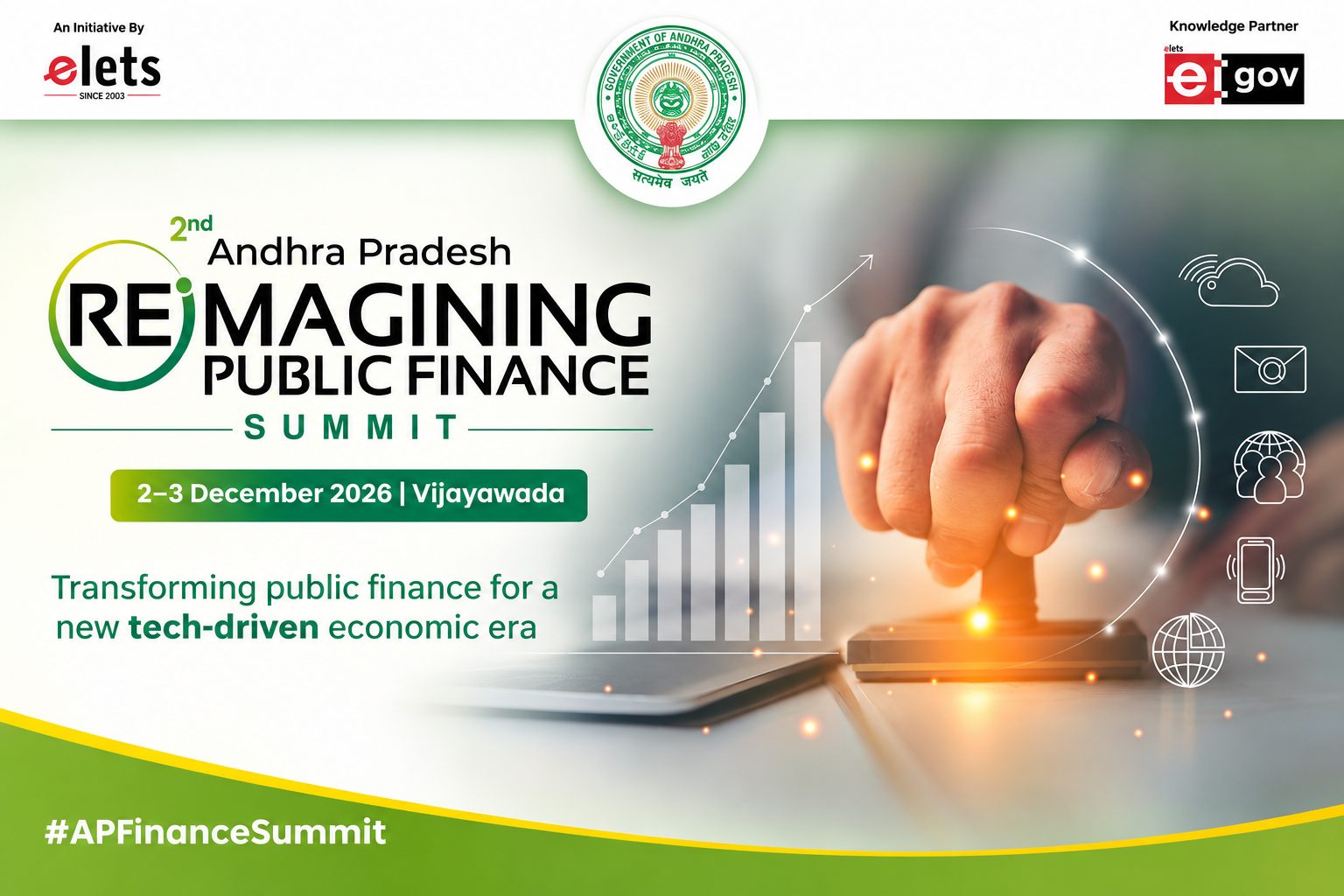
The growing role of AI in public auditing highlights how technology can improve financial accountability and the use of public resources. These themes will be central to the 2nd Andhra Pradesh Reimagining Public Finance Summit 2026, taking place on 2–3 December 2026 in Vijayawada, where leaders will explore how innovation and stronger financial systems can support India’s development priorities.